 |
customer@davidpublishing.com |
 |
3275638434 |
 |
 |
| Paper Publishing WeChat |

This work is licensed under a Creative Commons Attribution-NonCommercial 4.0 International License
Tongele N. Tongele
Full-Text PDF XML 999 Views
DOI:10.17265/1934-7359/2021.11.001
Department of Mechanical Engineering, The Catholic University of America, Washington, DC 20064, USA
Congo basin, rainforest, deforestation, agriculture, farming, mining, greenhouse, climate change.
[1] Congo Basin on World Map—Bing Images.

[2] Gray, E. 2017. “NASA Survey Technique Estimates Congo Forest’s Carbon.” https://climate.nasa.gov/news/ 2656/nasa-survey-technique-estimates-congo-forests-carbon/.
[3] NASA Earth Observatory. 1999. “Deforestation in the Democratic Republic of the Congo.”
[4] Union of Concerned Scientists. 2012. “Tropical Deforestation and Global Warming.” https://www.ucsusa.org/resources/tropical-deforestation-and-global-warming.
[5] Harris, N., and Gibbs, D. 2021. “Forests Absorb Twice As Much Carbon As They Emit Each Year.” In Quantifying Carbon Fluxes in the World’s Forests, World Resources Institute.
[6] Radford, T. 2020. “Vast Carbon Sink Found in Congo Basin.” The Good Men Project.
[7] Looby, C. 2017. “Discovering the Congo Carbon Sink.” www.mongabay.com.
[8] Grossman, D. 2020. “The Congo Rainforest Is Losing Ability to Absorb Carbon Dioxide. That’s Bad for Climate Change.” Pulitzer Center.
[9] Tchatchou, B., Sonwa, D. J., Ifo, S., and Tiani, A. M. 2015. “Deforestation and Forest Degradation in the Congo Basin: State of Knowledge, Current Causes and Perspectives.”
[10] Erickson-Davis, M. 2018. “Congo Basin Rainforest May Be Gone by 2100, Study Finds.”
[11] Megevand, C. 2013. Deforestation Trends in the Congo Basin: Reconciling Economic Growth and Forest Protection (Directions in Development). Illustrated ed., World Bank Publications.
[12] Sonwa, D. 2014. “Sustainable Development in the Congo Basin: Moving Beyond the Biodiversity Agenda.” CIFOR Forests News.
[13] Congo Basin Settlement Pattern. https://www.britannica.com/place/Democratic-Republic-of-the-Congo/Government-and-society.
[14] “A House under Construction in the Congo Basin.” 9c936db62875895d16a64bf1c26c7191.jpg, pinimg.com.

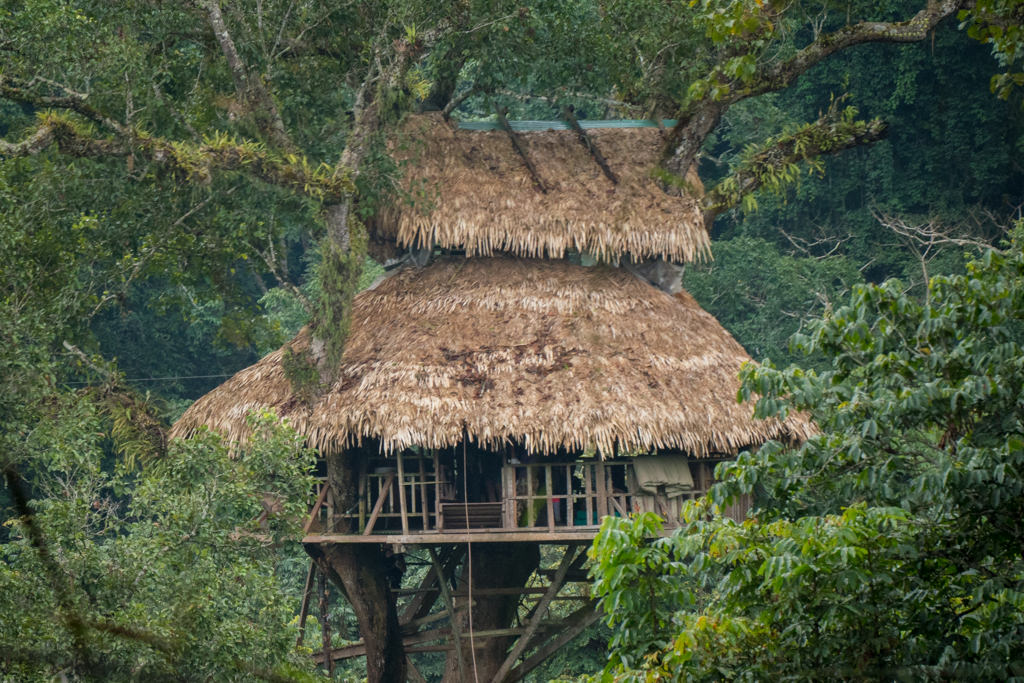
[15] “Two-Story House Suspended on a Tree.” https://www.indietraveller.co/wp-content/uploads/2018/02/P1050180.jpg.
[16] Slush and Burn Agriculture—The DRC. https://www.flickr.com/photos/unep_dc/8539842154.
[17] Sonwa, D., et al. 2020. “Living under a Fluctuating Climate and a Drying Congo Basin.” Sustainability 12 (7): 2936.
[18] Tongele, T. N. 2015. Rise and Shine: Resilient People and Immense Resources in the Shadow of Death. Green Ivy Publisher.
[19] Behrendt, H., Megevand, C., and Sander, K. 2013. “Deforestation Trends in the Congo Basin: Reconciling Economic Growth and Forest Protection.” Working Paper 5, Wood-Based Biomass Energy.
[20] Schure, J., Ingram, V., Marien, J.-N., Nasi, R., and Dubiez, E. 2011. “Fuelwood for Urban Centres in the Democratic Republic of Congo.” https://www.cifor.org/publications/pdf_files/infobrief/3678-brief.pdf.
[21] Hancock, T., ed. 2016. “Importance of Artisanal Mining Increases in DRC.” https://www.miningweekly.com/ article/importance-of-artisanal-mining-increases-in-drc-2016-11-17.
[22] GreenPeace USA. “Congo Basin Forests.” https://www.greenpeace.org/usa/forests/congo-basin/.
[23] Pyhala, A., Orozco, A., and Counsell, S. 2016. “Protected Areas in the Congo Basin: Failing Both People and Biodiversity?” https://www.rainforestfoundationuk.org/media.ashx/protected-areas-in-the-congo-basin-failing-both-people-and-diversity-english.pdf.
[24] Engunda Ikala, A., Halleux, C., Mambeta, R., and Williams, L. 2018. “Tracking Deforestation in DRC’s Forest Concessions Is Complicated.” https://www.wri.org/insights/tracking-deforestation-drcs-forest-concessions-complicated.
[25] “Typical Industrial Logging.” www.rainforestfoundationuk.org.
[26] Lawson, S. 2014. “Illegal Logging in the Democratic Republic of the Congo.” https://www.chathamhouse. org/sites/default/files/home/chatham/public_html/sites/default/files/20140400LoggingDRCLawson.pdf.
[27] Schneider, V. 2020. “Poor Governance Fuels ‘Horrible Dynamic’ of Deforestation in DRC.” https://news.mongabay.com/2020/12/poor-governance-fuels-horrible-dynamic-of-deforestation-in-drc/.
[28] Shihua, T. 2019. “China’s JCHX Mining to Pay USD2.75 Million for DRC Copper Mines.” https://www.yicaiglobal.com/news/china-jchx-mining-to-pay-usd275-million-for-drc-copper-mines.
[29] Campbell, J. 2020. “Why Cobalt Mining in the DRC Needs Urgent Attention.” Retrieved from Why Cobalt Mining in the DRC Needs Urgent Attention (cfr.org)
[30] Tyukavina, A., et al. 2018. “Congo Basin Forest Loss Dominated by Increasing Smallholder Clearing.” Science Advances 4 (11): eaat2993.
[31] The World Bank. 2021. “The World Bank in DRC: The World Bank is Helping to Fight Poverty and Improve Living Standards for the People of the Democratic Republic of Congo, through Education, Energy, Health and Other Social Services.” Democratic Republic of Congo Overview (worldbank.org)
[32] Leonetti, C. 2010. Indigenous Stewardship Methods and NRCS Conservation Practices—Guidebook. USDA.
[33] Sinnassamy, J.-M. 2019. “The Congo Basin Is Critical to the Health of Our Planet.” Global Environment Facility. https://www.thegef.org/blog/congo-basin-critical-health-our-planet.
[34] Smith, T. E. 2019. “The Future of the Planet is Africa.” The Leonardo DiCaprio Foundation.
[35] Kerry, J. 2021. “Remarks on the Urgency of Global Climate Action.” https://www.state.gov/remarks-on-the- urgency-of-global-climate-action/.
[36] Atyi, R. E. 2019. “Despite Size, Congo Basin Attracts Less Funding Than Other Major Forest Areas.” CIFOR Forests News.
[37] Climate News Network. 2015. “Climate Cash Flow to Poorer Nations Is Still Too Slow.”
[38] Yeo, S. 2019. “Where Climate Cash Is Flowing and Why It’s Not Enough. Investments Need to Ramp Up to Keep Global Warming within Safe Thresholds.” Nature 573: 328-31. https://doi,org/10.1038/d41586-019-02712-3.
[39] Harvey, F. 2020. “Finance Holds Climate Key but Poor Countries Fear Missing Out.” Presented at Cop26: Glasgow Climate Change Conference 2021.
[40] Vidal, J. 2008. “Can Money Save the Congo Basin Rainforest?” The Guardian.